↓ Skip to main content

Articles

2026

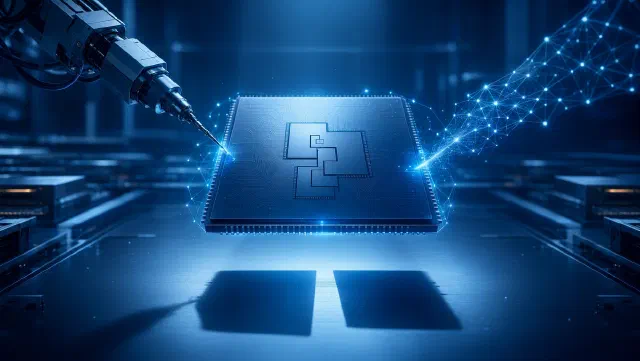
OpenAI Builds Its Own Chip — With Help From Its Own AI

·977 words·5 mins

OpenAI and Broadcom unveiled Jalapeño on June 24 — OpenAI’s first custom ASIC, targeting 50% lower inference cost per token vs. Nvidia GPUs. The 9-month development cycle was accelerated with OpenAI’s own AI models. Full production ramp in 2027-2028; small deployments by end of 2026.

Four Google DeepMind Researchers Exit in Six Days — Three Go to Anthropic

·922 words·5 mins

In six days (June 18-24), four of Google DeepMind’s most prominent researchers departed: John Jumper (Nobel laureate, AlphaFold) and Jonas Adler (AI coding lead) went to Anthropic; Noam Shazeer (Transformer co-author, Gemini co-lead) to OpenAI. Bloomberg confirmed all four on June 24. Days later, Google confirmed Gemini 3.5 Pro will miss its publicly committed June GA.

When the Builder Becomes the Built: Anthropic's AI Now Writes 80% of Its Own Code

·1331 words·7 mins

Anthropic disclosed at Code with Claude Tokyo that Claude now generates 80% of all production-merged code at Anthropic — 8x more code per engineer per day, 76% success on open-ended agentic tasks (up 50 percentage points in six months), and a 52x ML optimization speedup with Mythos Preview. The company building the most capable AI coding tool has become its own most compelling case study.

Ornith 1.0: Why Every Engineer Should Care About AI Sovereignty Right Now

·969 words·5 mins

DeepReinforce’s Ornith 1.0 hits 82.4% on SWE-Bench Verified and 77.5 on Terminal-Bench 2.1 — matching Claude Opus 4.7 — under MIT license with no regional restrictions. The timing is not a coincidence: open, sovereign AI infrastructure is no longer a nice-to-have.

Frontier AI Access Is Now Foreign Policy: What Japan's Mythos Deal Reveals

·1340 words·7 mins

On June 26, Japan’s Finance Minister announced MUFG, SMBC, and Mizuho will receive Mythos 5/Fable 5 access via a US-Japan bilateral AI coordination deal — the same day GPT-5.6 was restricted to roughly 20 pre-approved US organizations under executive order. Frontier AI access has become a diplomatic instrument, and that changes how enterprise teams should think about model infrastructure risk.

CodePlain's Regenerative Vision: The Right Idea, Executed Wrong

·1205 words·6 mins

CodePlain argues that code should be regenerated from specs, not maintained. The core insight — specs as the canonical artifact, code as ephemeral output — is exactly right. But treating full regeneration as the solution is naive for anything beyond greenfield toys.

The MCP Token Tax: 32x Overhead, $51K/Month, and Four Ways to Fix It

·1430 words·7 mins

Three independent 2026 benchmarks confirm MCP adds 32x token overhead vs. direct CLI calls on simple tasks — the root cause is schema injection, not model inefficiency. At 10,000 requests per day, the same workload costs $51,000/month via MCP and $120/month via CLI. Here’s what’s happening and four mitigations that actually work.

OpenAI Launches GPT-5.6 Sol, Terra, and Luna — Then the Government Steps In

·1129 words·6 mins

OpenAI unveiled GPT-5.6 on June 26 with three variants: Sol ($5/$30/M, 1.5M context), Terra ($2.50/$15/M), and Luna ($1/$6/M). Within hours, the Trump administration restricted access to ~20 pre-approved organizations under a June 2 executive order. General availability is expected mid-July — the same week Mythos 5 was partially reinstated for US critical infrastructure.

GitHub Copilot App Is Generally Available. Its Most Interesting Feature Is Agent Merge.

·1192 words·6 mins

GitHub’s standalone Copilot desktop app went GA on June 17 for macOS, Windows, and Linux. The real story isn’t the canvas or the parallel sessions — it’s Agent Merge, which monitors CI, tracks required reviewers, addresses failing checks, and waits for merge conditions automatically. That’s the clearest acknowledgment yet that the bottleneck isn’t writing code.