Most vendor due diligence for AI coding tools stops at security questionnaires and pricing. Governance rarely makes the list. With Anthropic heading for the public markets, it should, because the company has an unusual control structure that outside investors will now be buying into.
What was announced#
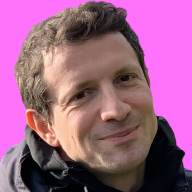
On October 21, 2026, Anthropic announced that Christopher Stubbs joined the Long-Term Benefit Trust (LTBT). Anthropic’s Long-Term Benefit Trust page lists him as the Samuel C. Moncher Professor of Physics and of Astronomy at Harvard. Press coverage, such as Crypto Briefing’s report, describes a career in observational cosmology, including work on the accelerating expansion of the universe and the Vera C. Rubin Observatory.
The Trust’s other changes in 2026, per Anthropic’s page:
- Kanika Bahl and Zach Robinson stepped down in January.
- Tino Cuéllar stepped down in August to become Anthropic’s Chief Global Affairs Officer.
- Neil Buddy Shah (Chair), Richard Fontaine and Ben Bernanke are listed as current Trustees alongside Stubbs.
The Trust is described as “an independent body of five financially disinterested members.” Crypto Briefing reports that Stubbs fills one of two open seats, which would leave one vacant. I could not confirm the vacancy from a primary source, so treat that detail as secondary.
How the structure works#
The mechanics matter more than the names:
- Anthropic created a stock class, Class T, held exclusively by the Trust.
- Class T lets the Trust elect and remove a share of the board that phases in over time. Anthropic says the Trust will elect a majority of the board “within 4 years.”
- Investors from Series C onward elect a separate director seat.
- Class T carries protective provisions that require the Trust to be notified of certain significant corporate actions.
- Per Crypto Briefing, trustees hold no equity and are paid on a time basis.
Anthropic is also a public benefit corporation, so the board has a legal mandate to weigh its stated mission alongside shareholder returns. The Trust is the enforcement arm of that idea.
Why a CTO should care#
I am openly pro-Anthropic on this blog, so let me be precise about where that enthusiasm ends. Claude Code is the best autonomous coding tool I use, but “best tool” and “best-governed vendor” are separate claims. Here is how the structure maps to concrete concerns.
Roadmap stability. The reason to care about a mission-weighted board is that it constrains one category of vendor behavior: sudden pivots driven purely by quarterly pressure. Safety-related decisions, like the cautious release posture on frontier models, are easier to sustain when the board is not purely shareholder-aligned. That is an argument, not a guarantee.
Pricing and access. A newly public company faces earnings pressure. We have already seen friction around plan limits and access changes this year. Governance structure does not prevent price changes. Do not assume the Trust protects your per-seat bill.
Concentration risk. If you have standardized your engineering org on one agent, your exposure is to the vendor’s decisions in general. A good Trust reduces one tail risk and leaves the others untouched.
The caveats#
Crypto Briefing notes that the trust agreement itself has not been published, which leaves open questions about its rules. I cannot resolve that from the sources I read. Anthropic’s page describes the structure at a high level; the details of how the Trust balances its duties, how disputes resolve, and what amendment rights exist are exactly what public-market investors will probe.
Two other limits on this post:
- I did not read the S-1 or any prospectus. My earlier roadshow coverage relied on Anthropic’s own notice, and this post adds nothing on valuation or pricing.
- Press accounts disagree in small ways. One outlet appears to have misnamed him “David Stubbs.” Anthropic’s page and most reports say Christopher.
What to do with this#
A practical checklist for teams that depend on Claude Code in production:
- Add governance to your vendor review. Note who can change the terms of service, pricing and model availability, and how much notice you get.
- Keep your specs portable. This is the Spec-Driven Development angle: if your intent lives in specs, tests and
CLAUDE.mdfiles rather than in a vendor-specific chat history, switching cost stays low. Good governance is a reason to stay, and portable specs are what keep staying a choice. - Pin and test model versions. Defaults change. Treat the model alias as a dependency and version it.
- Watch the filings. Once the prospectus’s governance section is public, read the Class T and board-composition language yourself rather than relying on summaries, including mine.
The take#
Adding a cosmologist to a five-seat trust will not change your Claude Code experience on Monday. But the Trust is the least-discussed part of Anthropic’s pitch, and the IPO turns it from a footnote into a stress test. A structure that looks fine in a private company with patient investors gets tested when public shareholders want growth.
I think the structure is a real differentiator compared with vendors whose boards answer only to returns. I also think the right posture is the one we apply to any dependency: appreciate the design, read the terms, and keep your exit open.