Most agentic coding demos still start from a specific instruction: fix this bug, implement this ticket, refactor this function. Cognition’s newest Devin feature, Code Scans, starts from something vaguer — “cut our build time,” “improve our SEO,” “find the flaky tests” — and is supposed to turn that into a stack of concrete, mergeable pull requests without a human first breaking the goal into tickets. Announced September 16, it’s a genuinely different shape of automation than the model-launch news this blog has covered from Cognition all month, and it’s worth separating from that noise.
How the pipeline actually works#
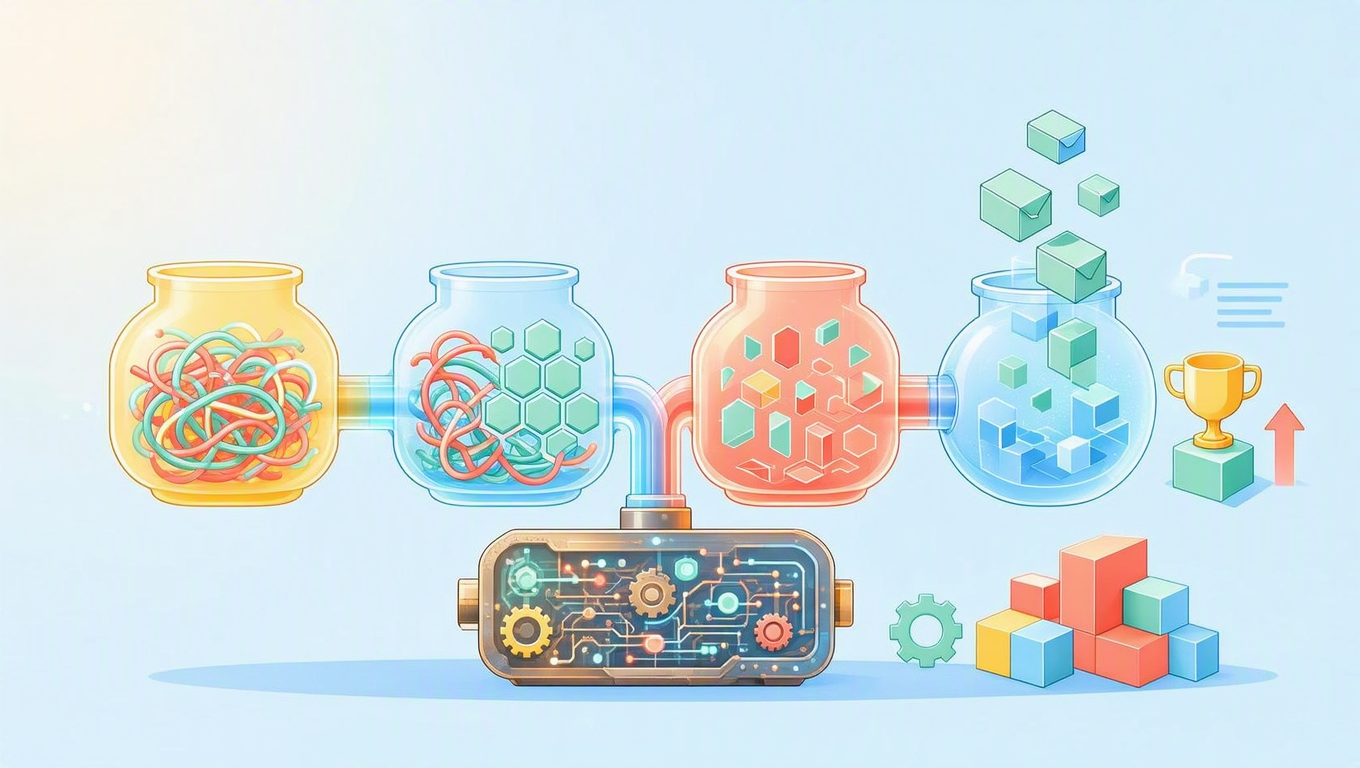
Code Scans runs what Cognition calls an “Agentic MapReduce” pipeline, in four phases:
- Plan — Devin reads the repository and the stated goal, then writes rules for what counts as relevant code.
- Shard — those rules run across the whole codebase, splitting matching code into focused batches small enough for a single agent to reason about.
- Map — multiple Devin agents work each batch in parallel, investigating and reporting findings independently.
- Reduce — a final agent consolidates every batch’s findings, removes duplicates, and prioritizes what’s worth turning into a pull request.
The MapReduce framing is apt and, for anyone who’s watched agentic coding tools bump into context-window limits on large-repo tasks, the actual point: instead of one agent trying to hold an entire codebase’s context at once, the work is deliberately partitioned so no single agent call has to.
The numbers, and who’s reporting them#
Cognition’s own launch post cites three case studies. At Philips (Digital Computational Pathology, Enterprise Informatics), Code Scans produced a 96% PR merge rate and saved more than 700 engineering hours during the testing period. On the Dioxus Rust project, a Code Scan cut clean debug build time from 58.6 seconds to 21.0 seconds — a 64% reduction across 22 workspace crates. And Cognition ran Code Scans against its own marketing sites, lifting devin.ai’s Ahrefs health score from 87 to 92 and cutting slow-loading pages by 73%.
Those are real, specific numbers, and they’re a more honest kind of case study than a raw benchmark score — a merge rate and an hours-saved figure are closer to what a customer actually cares about than a leaderboard percentile. But they’re also entirely self-reported: one named enterprise customer, one open-source repo, and Cognition’s own website. No independent replication exists yet, and no pricing has been published — access is through the /scan command in the Devin web app, availability and cost undisclosed.
The thread this blog keeps pulling on#
Code Scans is a workflow and orchestration layer, and it’s a good one on the evidence available. But it’s still sitting on top of SWE-2, the model Cognition shipped September 10 — post-trained on Moonshot’s Kimi K3 base, not a frontier model Cognition trained itself. That’s the same observation this blog made about SWE-2 at launch, and about SWE-1.7 before it, and it applies just as much to Code Scans: however good the plan/shard/map/reduce orchestration is, Cognition’s $48 billion valuation is still betting that the workflow layer — not the underlying model — is where the durable moat sits.
It’s a coherent bet, and not obviously wrong; Claude Code’s own edge over IDE-anchored competitors has always been more about harness design (context management, permissioning, headless operation) than raw model access, since most of these tools can be pointed at more than one frontier model if their architecture allows it. But Cognition doesn’t have that optionality in the same way — Devin’s whole identity is bound to whichever base model Cognition licenses and post-trains next, and Code Scans inherits that dependency along with the orchestration wins. A Philips-grade case study is a genuinely good sign for the product. It isn’t evidence Cognition has closed the gap this blog has flagged since the Series E: a workflow this good, built on a model that isn’t yours, is a rental with excellent tenant improvements — still a rental.
Sources: Cognition — “Introducing Code Scans” (primary, Sept 16, 2026, pipeline mechanics, case-study figures, availability); this blog’s prior coverage of Cognition’s SWE-2 launch and Cognition’s Series E close.