
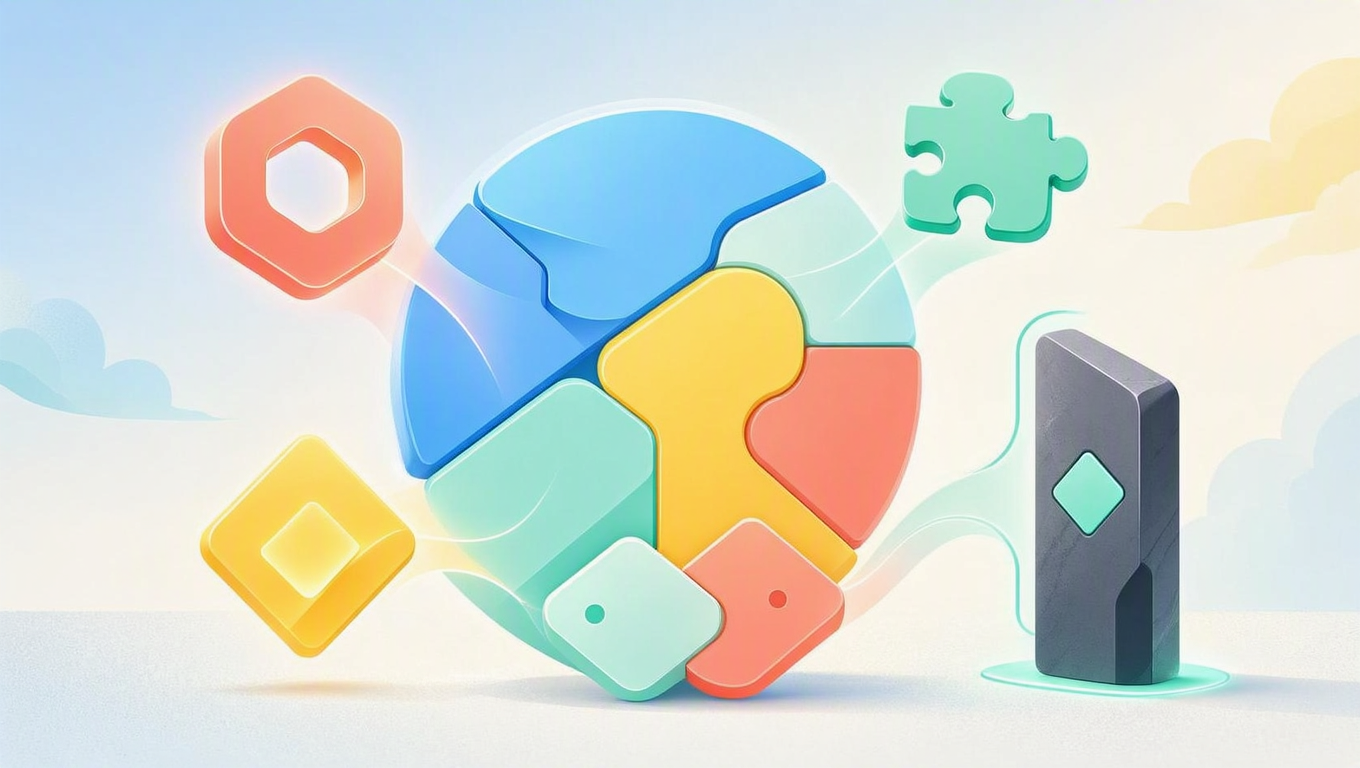
Anthropic spent the last year building separate front doors into Claude: a chat window for quick questions, Cowork for longer agentic work, Design for prototyping, and Claude Code for, well, code. On September 16 it tore three of those doors down. Claude Chat and Cowork are now one product, Claude Design lives inside the same conversation window instead of a standalone workspace, and two new beta products — Claude Docs and Claude Slides — ship alongside the merge. Anthropic is calling the initiative “One Claude.” Claude Code, notably, isn’t part of it.
What actually changed#
The mechanics are simple, and Anthropic is upfront about why it did this. From its own announcement: “We built Cowork as a separate place for bigger work, and Design for visual work. People used both, and told us the frustrating part was deciding where a task belonged.” So the choice is gone. There’s no more toggle between “chat mode” and “Cowork mode” — you type a request into one window, and Claude decides for itself whether it’s a quick answer or a multi-step task that needs tools, connectors, and background execution.
The two new products fill gaps Google Workspace and Microsoft 365 users would otherwise notice immediately:
- Claude Docs (beta): draft a document inside a conversation, comment on sections, export to Google Docs or Word when you’re done.
- Claude Slides (beta): build and edit a presentation in the same window, download as PowerPoint or PDF.
Claude Design — the website/prototype tool Anthropic shipped as a standalone product back in April — now works anywhere inside a conversation instead of requiring its own tab, though the standalone version still functions independently.
None of this is subtle about what Anthropic is chasing. A senior economist quoted in the announcement describes asking Claude to “pull up [a legal research database], and it would pull all the cases, read them, figure out which other cases I might need, download them, and store them in a folder for my personal review” — inside the same window where they’d otherwise just ask a question. That’s the pitch: one surface that scales from a one-line answer to an unsupervised multi-step research task, without the user having to pre-declare which one they’re about to do.
The permission model didn’t get simpler along with the interface#
The one piece of nuance Anthropic kept, rather than flattened, is how much autonomy Claude gets by default. The announcement is explicit: Claude asks permission before taking actions unless the user opts into a “continuous work mode” where it only checks in when something actually needs a decision. That’s the same asking-forgiveness-vs-asking-permission tension Claude Code users already navigate with --dangerously-skip-permissions and auto mode’s classifier — Anthropic just imported it into the consumer product instead of inventing something new. Given this blog’s running position that permission architecture is where agentic tools actually differentiate themselves (not benchmark scores), it’s a good sign that the same team building Claude Code’s sandboxed auto mode is the one deciding how Claude Docs behaves when nobody’s watching it work.
Rollout is staged, and enterprise gets a real notice window#
Pro and Max subscribers get the merged interface first, across web, desktop, and mobile, rolling out “over coming weeks.” Team and Free plans follow later. Enterprise admins get at least 30 days’ notice before anything changes for their org — a small detail, but one Anthropic has learned to get right after a few product changes over the past year landed on enterprise customers with less warning than they wanted.
Why Claude Code stayed out of it#
Here’s the part worth dwelling on. Anthropic just spent a year’s worth of product surfaces — chat, Cowork, Design, and now Docs and Slides — folding them into a single, mode-agnostic window where Claude itself decides how much autonomy a task needs. That is exactly the kind of unification you’d expect to eventually swallow Claude Code too, if the goal were one Claude for everything. It didn’t happen, and there’s no indication it’s coming.
That’s not an oversight — it’s the correct call, and it’s consistent with the architectural bet this blog has been making the case for since Claude Code shipped. A knowledge worker asking Claude to draft a memo, build a slide deck, or research case law benefits from a single conversational surface that guesses at their intent, because the cost of a wrong guess is low and the interaction is inherently exploratory. A developer running an agent against a real codebase needs the opposite: a terminal-native tool that reads CLAUDE.md, respects a sandboxed permission model tuned for Bash and git, integrates with worktrees and CI, and behaves identically whether it’s invoked interactively or headless from a GitHub Action. Folding that into a chat window that also drafts PowerPoint decks wouldn’t make Claude Code more capable — it would make it worse at the one job it’s actually built for.
Compare that to how Cursor has approached the same question. Cursor’s own horizontal expansion — Projects’ coordinator agents, Origin’s git hosting, the general-purpose “Sand” agent reported to be in internal testing — keeps adding surface area onto a single IDE-anchored product, on the theory that more capability bolted onto the editor is the path forward. Anthropic just demonstrated the opposite instinct: consolidate the parts of the product built for humans deciding what to do next, and leave the part built for autonomous execution alone, because merging them would blur the exact distinction that makes each one good at its job. Product-line discipline isn’t as flashy as a unified interface announcement, but it’s the harder — and more honest — call.
Sources#
- Claude Cowork and chat are now one Claude — Anthropic, September 16, 2026 (primary)
- Anthropic is killing off Claude Cowork and folding it into Claude chat, launching Claude Docs and Claude Slides — VentureBeat, September 16, 2026
- Anthropic merges Claude chat and Cowork in one interface — TechCrunch, September 16, 2026